

How to Choose the Right IT Outsourcing Pricing Models
 MSP Association®
Selecting the wrong IT outsourcing pricing model can drain your budget and derail project timelines. Companies waste an average of 23% more on IT projects when they choose misaligned pricing structures.
Which Pricing Model Fits Your Project
Fixed price contracts deliver optimal results for small, well-defined projects with clear deliverables. However, research indicates that fixed price contracts are connected with a higher risk of project failure compared to time and materials types. This model shifts risk to your vendor and makes them responsible for cost overruns and timeline delays. Fixed contracts become problematic when scope changes occur frequently, as vendors typically charge 40-60% markup on change requests to protect their margins.
Time and Materials for Complex Projects
Time and materials contracts provide maximum flexibility for projects with evolving requirements. Agile development projects achieve better outcomes with T&M models according to industry research. You pay hourly rates plus material costs, which creates transparency but requires active project management. T&M works exceptionally well for maintenance contracts where workload fluctuates unpredictably. The downside involves unlimited cost exposure if project scope expands beyond initial estimates.
Performance-Based Models Drive Results
Performance-based contracts tie vendor compensation to specific outcomes like system uptime, user adoption rates, or cost savings. Performance contracts improve service quality compared to traditional models. Value-based approaches work when you can measure clear business impact from IT services (such as reduced downtime or increased productivity). These models require sophisticated metrics and monitoring systems but align vendor interests with your business goals.
Shared Risk-Reward Arrangements
Shared risk-reward arrangements split both potential gains and losses between client and provider. These partnerships create stronger relationships for long-term engagements and motivate vendors to exceed expectations. The model works best when both parties can clearly define success metrics and share accountability for outcomes.
Now that you understand the core models available, you need to evaluate which factors matter most for your specific situation and business requirements.
What Factors Drive Your Pricing Model Choice
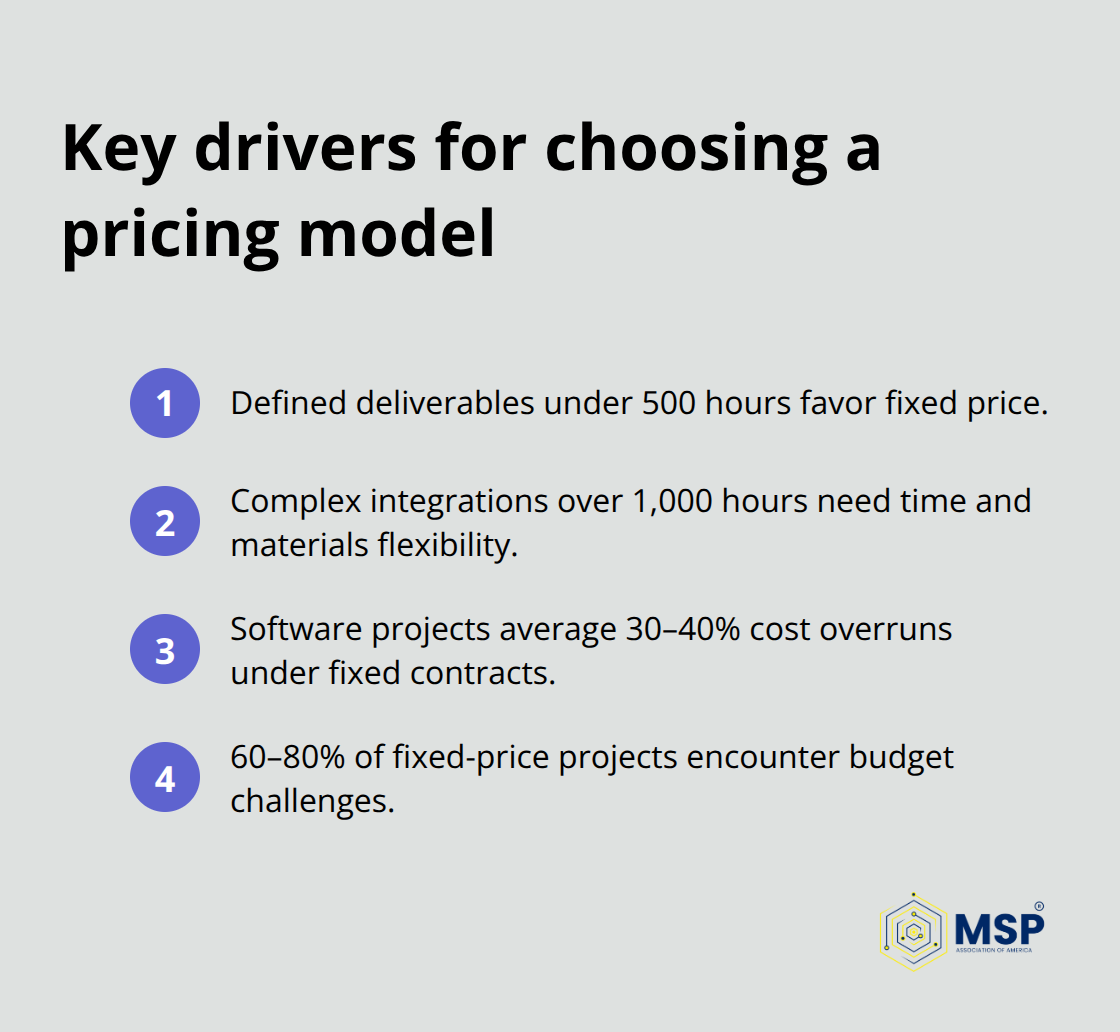
Project complexity determines your pricing model more than any other factor. Simple projects with defined deliverables under 500 hours favor fixed price contracts, while complex integrations that exceed 1,000 hours require time and materials flexibility. Software projects have on average a cost overrun of 30-40% and most projects (60-80%) encounter budget challenges under fixed contracts.
Web applications, database migrations, and infrastructure upgrades fall into predictable categories. AI implementations, custom integrations, and legacy system modernizations demand flexible approaches. Projects that span multiple departments or require stakeholder approvals throughout development need T&M structures to accommodate inevitable scope changes.
Budget Predictability Requirements
Budget predictability matters differently across organizations. Startups with limited runway prefer fixed contracts for cash flow certainty, while enterprises with $10M+ IT budgets can absorb T&M variability. Performance-based models require 15-20% budget reserves for incentive payments but deliver measurable ROI improvements.
Companies report better cost control with dedicated team models for ongoing support versus project-based contracts. Monthly budget cycles align poorly with fixed project payments, which makes T&M preferable for quarterly planning processes.
Risk Distribution Preferences
Risk tolerance varies dramatically between industries and company sizes. Healthcare and financial services organizations shift maximum risk to vendors through fixed contracts due to regulatory compliance requirements. Technology companies embrace shared risk models because they understand development uncertainties.
Manufacturing firms prefer performance contracts that tie payments to operational metrics (like system uptime or production efficiency). Risk-averse organizations pay 25-40% premiums for fixed contracts but avoid budget surprises that could impact quarterly earnings.
Vendor Management Capacity
Your internal management capacity affects which model works best. Fixed price contracts require minimal oversight once you define requirements clearly. T&M models demand active project management and regular vendor communication to control costs effectively.
Performance-based contracts need sophisticated monitoring systems and clear success metrics. Organizations with limited IT management resources often choose fixed price models to reduce administrative overhead, even when other models might deliver better value.
These factors interact with vendor capabilities and market conditions to shape your final decision. The pricing model you choose should reflect your business’s specific needs, growth plans, and budget constraints.
How Do You Calculate True Outsourcing Costs
Total cost of ownership calculations reveal hidden expenses that surface after contract execution. Direct hourly rates represent only 60-70% of actual project costs. You must add management overhead (15-20% of project value), knowledge transfer expenses ($5,000-$15,000 per handover), and potential rework costs that average 12% for offshore projects.
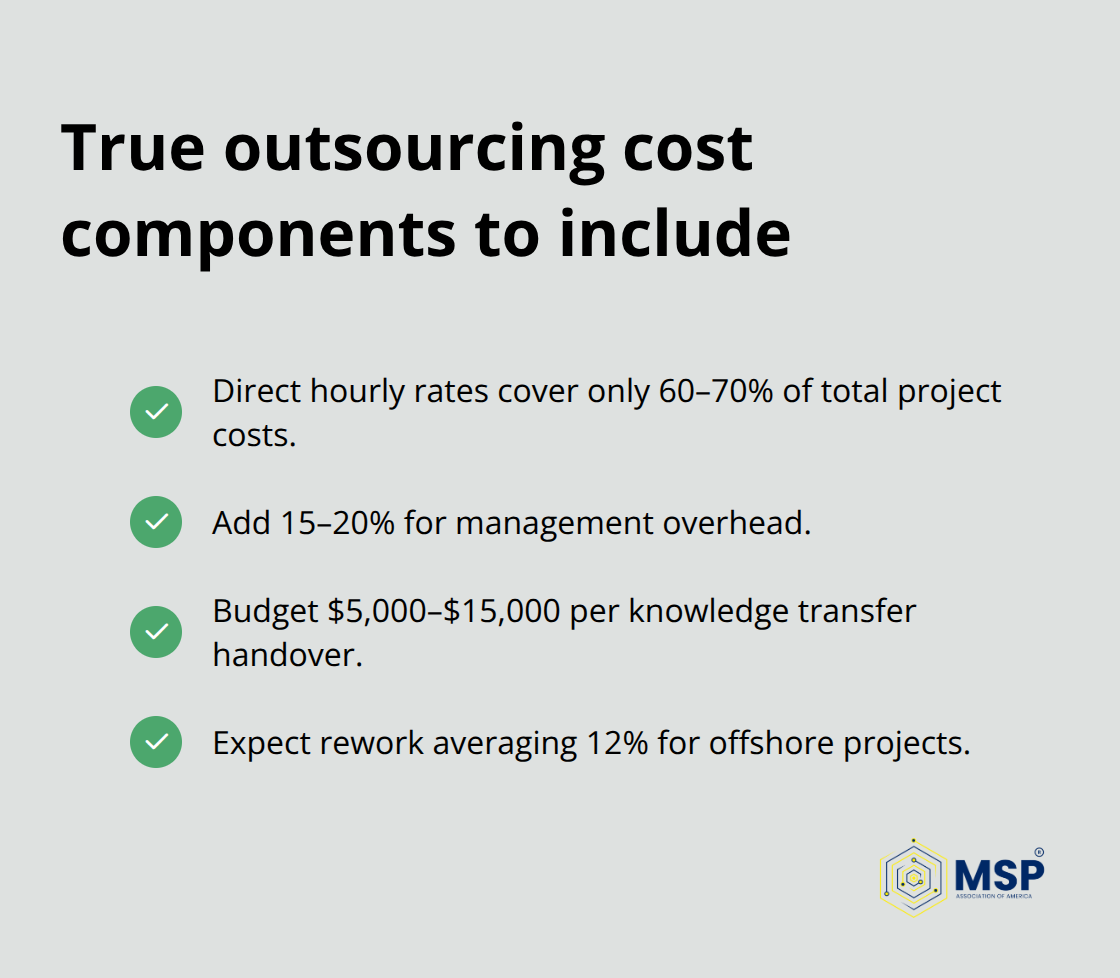
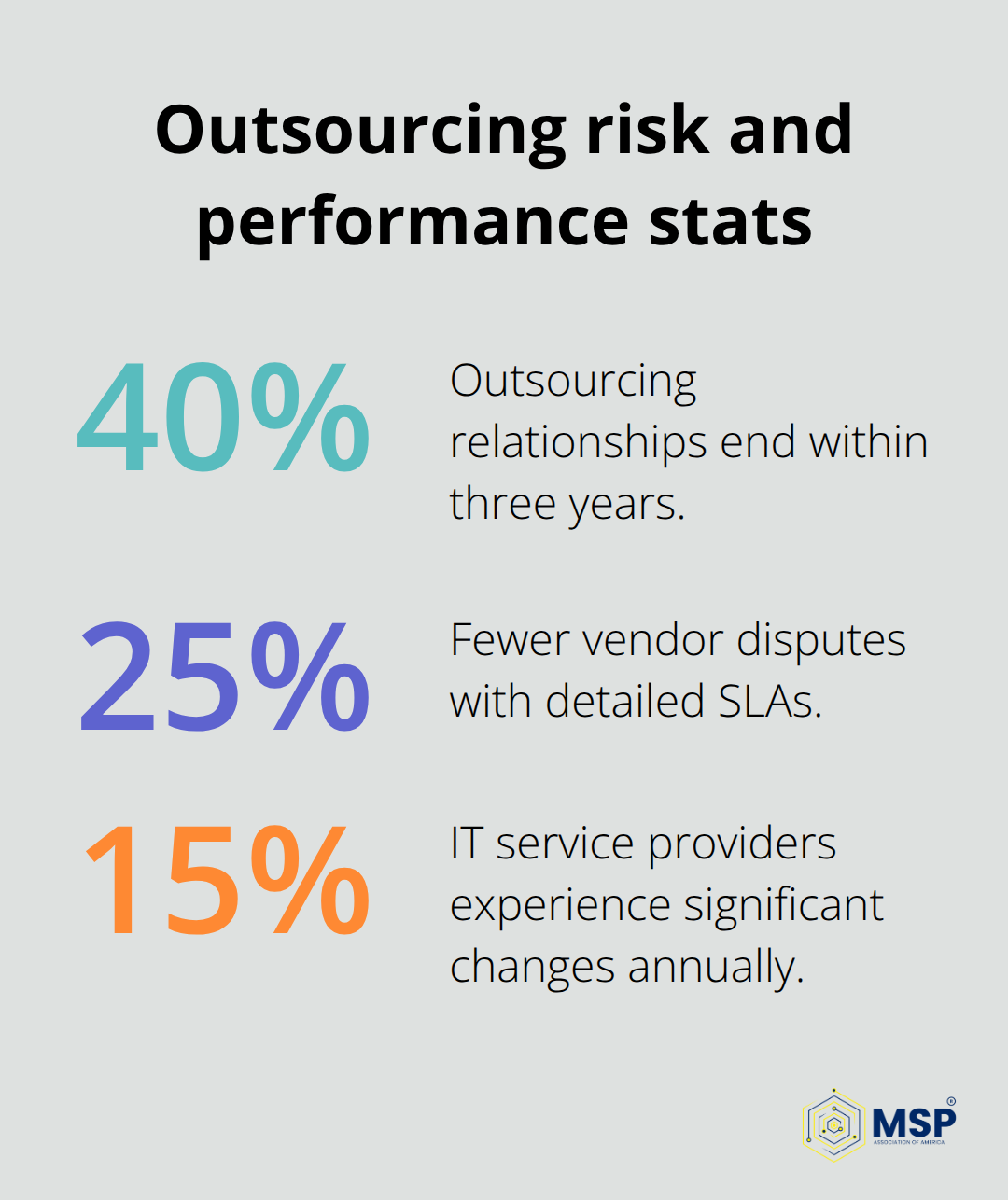
Fixed price contracts hide these variables but T&M models expose them clearly. Calculate vendor transition costs upfront because 40% of outsourcing relationships end within three years. Include contract termination fees, data migration expenses, and productivity losses during transitions.
Service Level Agreements Define Success
Service level agreements must specify measurable outcomes rather than vague commitments. Uptime requirements below 99.5% indicate inexperienced vendors, while 99.9% uptime costs 30-40% more but prevents revenue losses from system failures.
Response time SLAs should differentiate between critical (15 minutes), high (2 hours), and normal issues (24 hours). Penalty clauses work when they represent 5-10% of monthly fees per violation. IBM reports that companies with detailed SLAs experience 25% fewer vendor disputes.
Document escalation procedures, report frequencies, and performance review schedules. Vendors who resist specific SLA commitments lack confidence in their service delivery capabilities.
Vendor Track Record Predicts Future Performance
Vendor assessment requires examination of completed projects in your industry within the past 24 months. Request three client references and verify project outcomes independently. Vendors with less than 50 employees struggle with enterprise-scale projects, while those exceeding 500 employees often assign junior resources to smaller accounts.
Financial stability matters because 15% of IT service providers experience significant changes annually. Review vendor certifications like ISO 27001 for security and CMMI Level 3 for process maturity. Geographic presence affects service quality since distributed teams require sophisticated coordination.
Hidden Cost Factors You Must Consider
Project complexity multiplies base costs through unexpected requirements and scope changes. Factor in training expenses for your internal team to work with new vendor processes and tools. Communication overhead increases costs by 10-15% for offshore vendors due to time zone differences and language barriers.
Quality assurance activities consume additional resources beyond quoted project hours. Integration costs with existing systems often exceed initial estimates by 25-30%. A robust cost-benefit analysis helps identify these variables when comparing vendor proposals to avoid budget surprises during project execution.
Final Thoughts
The right IT outsourcing pricing models require careful analysis of your project requirements, budget constraints, and risk tolerance. Fixed price contracts work best for small, well-defined projects under 500 hours, while time and materials models provide flexibility for complex initiatives that exceed 1,000 hours. Performance-based arrangements align vendor incentives with your business outcomes but demand sophisticated systems to monitor progress.
Organizations make their biggest mistake when they focus solely on upfront costs rather than total ownership expenses. Hidden costs like management overhead, knowledge transfer, and potential rework can increase project expenses by 30-40% beyond initial estimates. Another common error involves the selection of models that don’t match internal management capacity or risk preferences.
Start your implementation with documentation of specific project requirements and success metrics. Request detailed proposals from multiple vendors and compare total costs rather than hourly rates alone.